
About
I provide couples therapy, sex therapy, youth & family therapy, and relationship therapy for individuals, couples, and families across Ontario.
I don’t just do this work in the therapy room. It’s something I live, practice, and continue to learn through in my own life.
My approach to relationships has been shaped by formal training and the environments I’ve worked in, the challenges I’ve faced personally, and the ways I’ve had to understand connection, communication, and change in real-lived contexts.
Professional Foundation
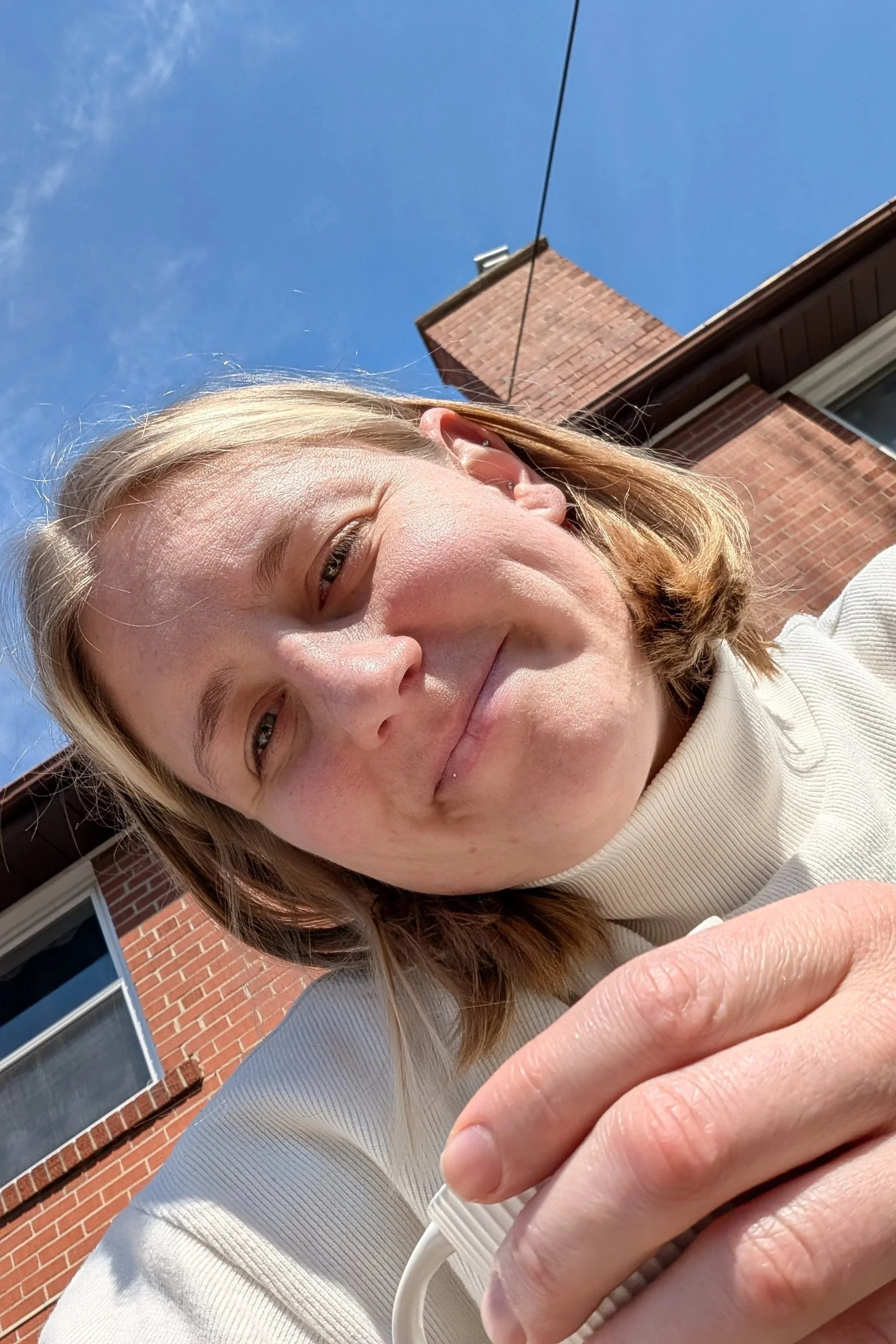
I have spent nearly a decade working in community mental health with youth and families. This work often happens outside of the traditional therapy room — in homes, in schools, and out in the world.
I walk alongside people facing complex realities, where mental health, environment, and systemic barriers are deeply intertwined. This required me to develop a way of working that was flexible, grounded, and responsive to real life, beyond theory. I learned about the power of attachment therapy and relationship repair in transforming mental health symptoms.
Root Cause
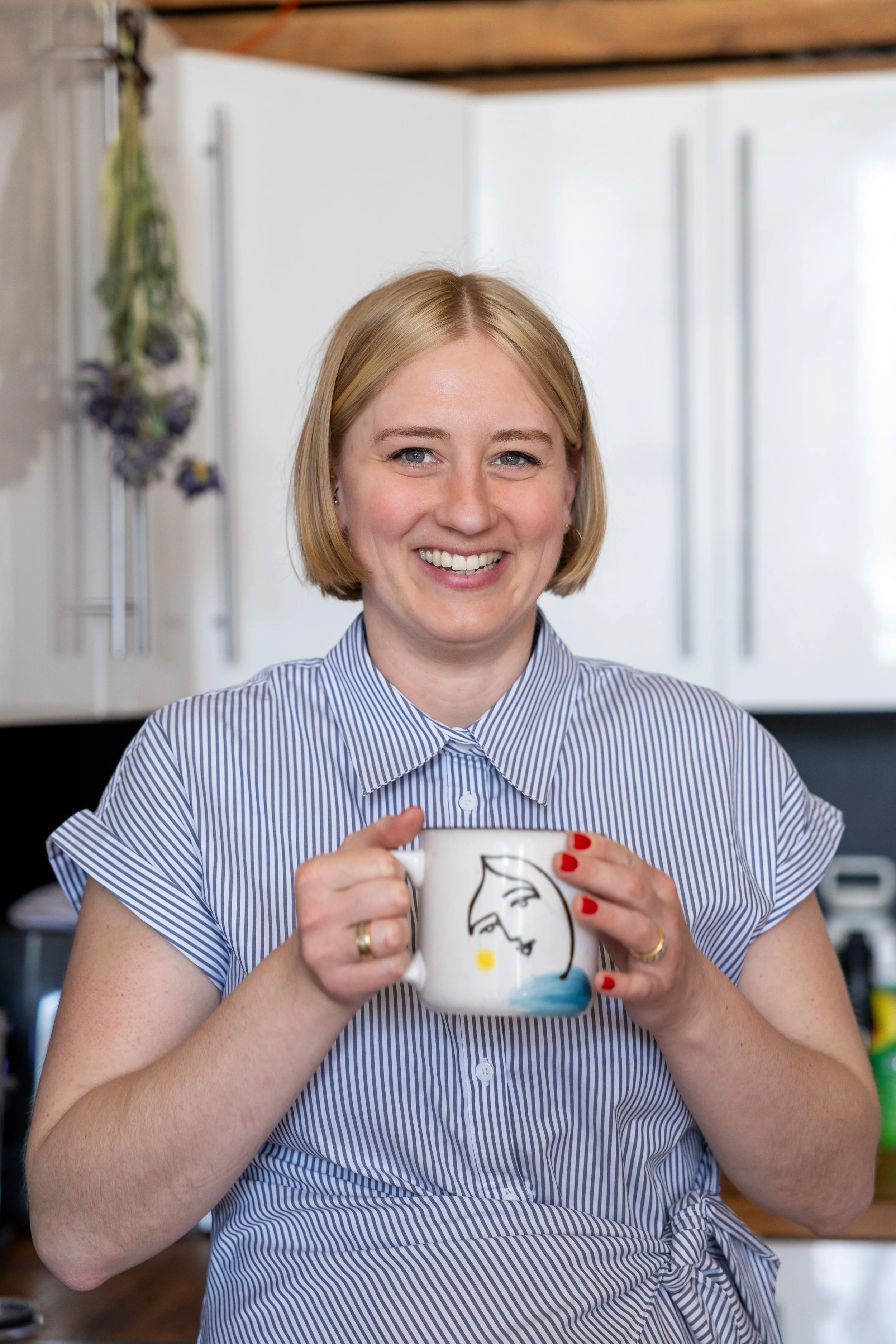
My own experience with chronic gut health challenges pushed me beyond surface-level solutions and into root cause change. It required significant shifts in how I live and has given me a deep respect for how difficult, and meaningful, real change can be.
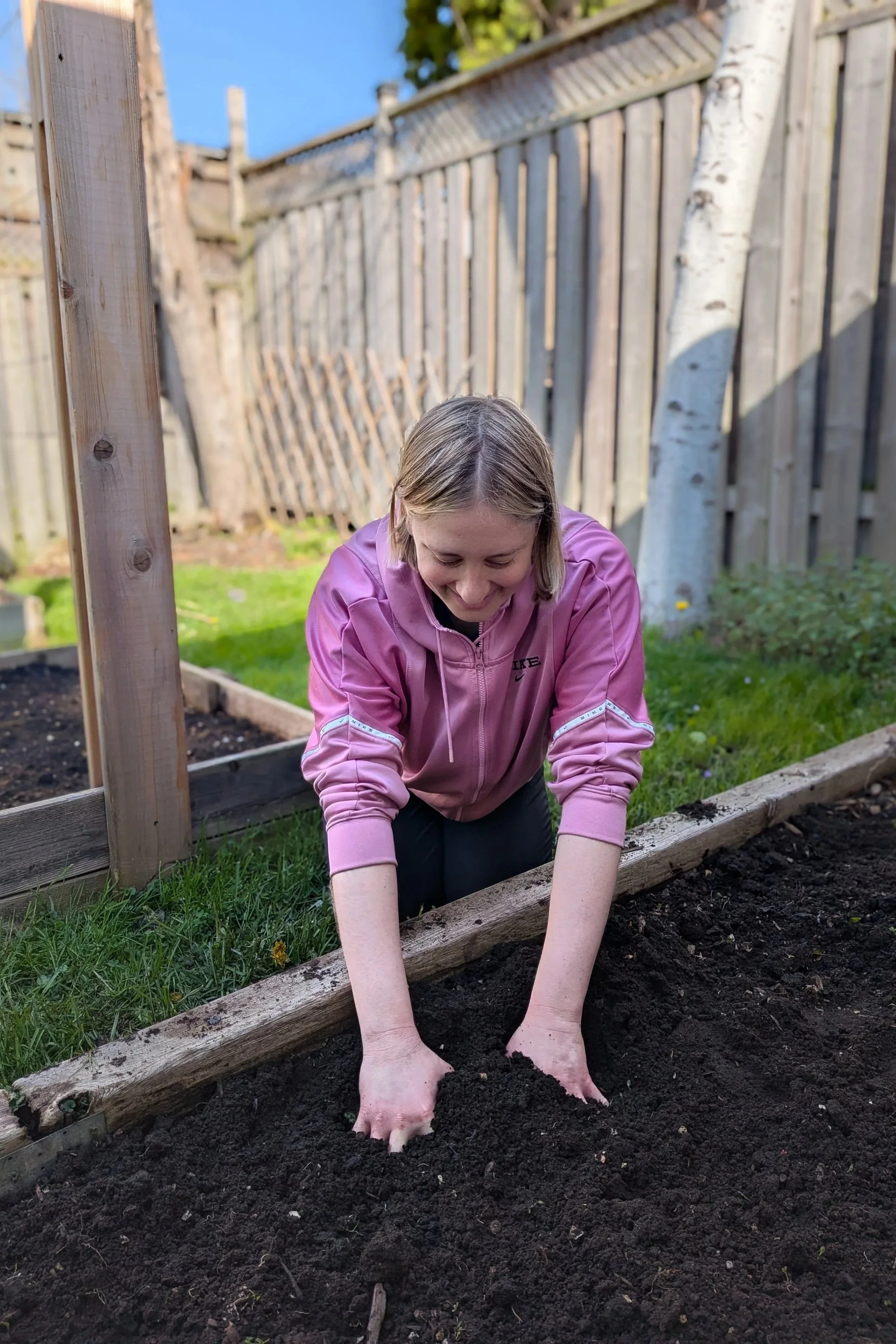
During the growing season, I commit myself to growing as much of my own food as possible. I began to see that the health of the soil, the food we eat, the body, the mind, and our relationships are all part of the same living system. It became clear that much of what feels fractured in modern life stems from disconnection from the natural systems we are part of.
Learning to support my gut at a root level led to more than an improved physical health. It strengthened my ability to recognize and trust my body’s signals — my “gut feeling.” As I became more attuned to this, I was less likely to override what I was sensing, and I noticed the impact extend into other areas of my life including my mental health and relationships. Change in one place inevitably moves through the whole.
This process of reconnecting to my body and the earth has brought me into a more instinctual way of being, grounded in subtle, nonverbal awareness. This continues to guide how I work with clients today.
Motherhood
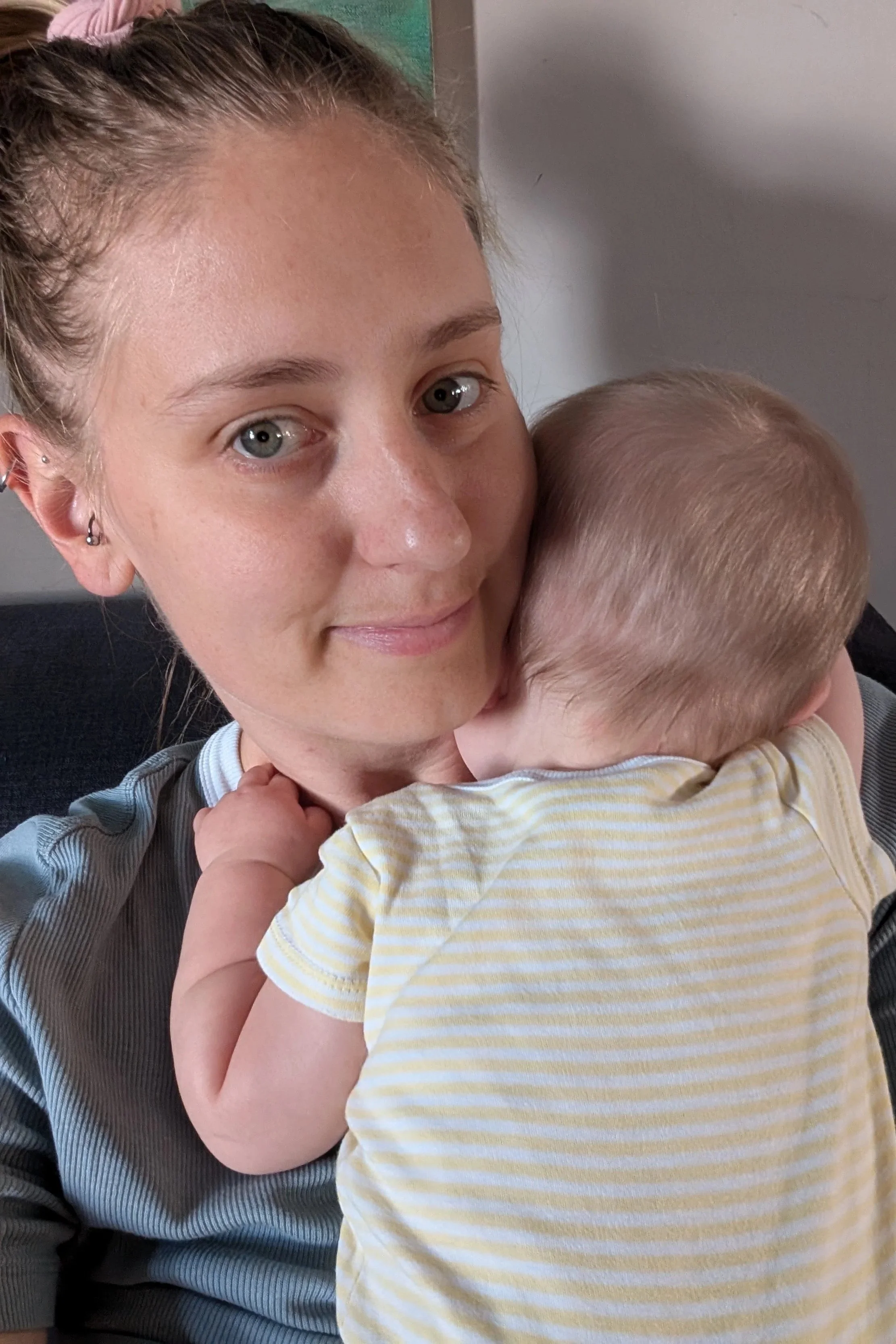
Becoming a mother has deepened my understanding of relationships in a profound way.
It has brought to life the early developmental processes I had studied for years, allowing me to witness in real time how connection, regulation, and attachment begin.
It has also reinforced how inherently embodied relationships are from the very start and how they develop through touch, proximity, rhythm, and presence.
Through this experience, I became more connected to the mother-baby bond as a kind of original relationship. A connection that forms at the threshold between the unknown and lived experience. It exists before we can make sense of it, and before we experience ourselves as separate.
In that way it reflects something essential about being human. A kind of origin point that we don’t consciously remember, but continue to orient toward in our relationships.
Sexuality
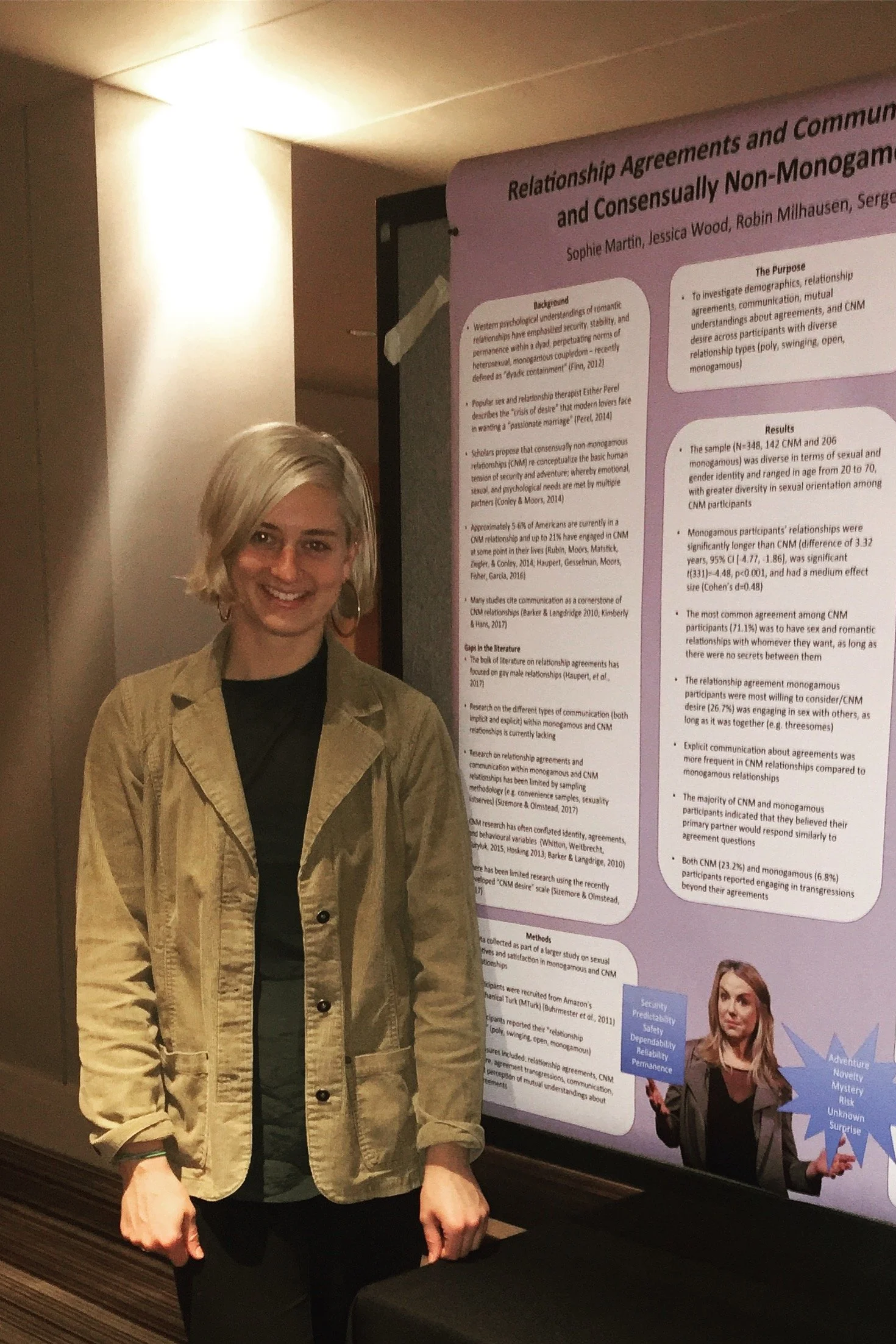
My interest in sexuality and relationships began early, influenced by growing up in an environment where openness, reduced shame, and curiosity was encouraged.
Over time, I’ve explored this area deeply through both research and practice. I see sexuality as an integral part of being human. Something that lives in the body and is closely tied to how we experience connection, pleasure, and vitality.
When this part of ourselves is shut down, ignored, or biased by shame, it impacts more than just intimacy — it affects how we feel in ourselves and in our relationship.
I identify as a queer, bisexual woman and welcome working with a wide range of relationship structures and identities.
Animal Communication
Training my dog in rally obedience has deepened my understanding of communication in ways I didn’t expect. It requires a high level of awareness of my own behaviour — how subtle cues, timing, and consistency impact response, and the relationship itself.
I saw firsthand that positive reinforcement is the most effective relational motivator because it builds safety within the relationship, while shame is deeply misaligned with how mammals actually learn and relate.
This practice continues to inform how I understand leadership, the balance of power in relationships, and how to guide change in a way that is both effective and deeply respectful of the life I’m in relationship with.
Embodiment
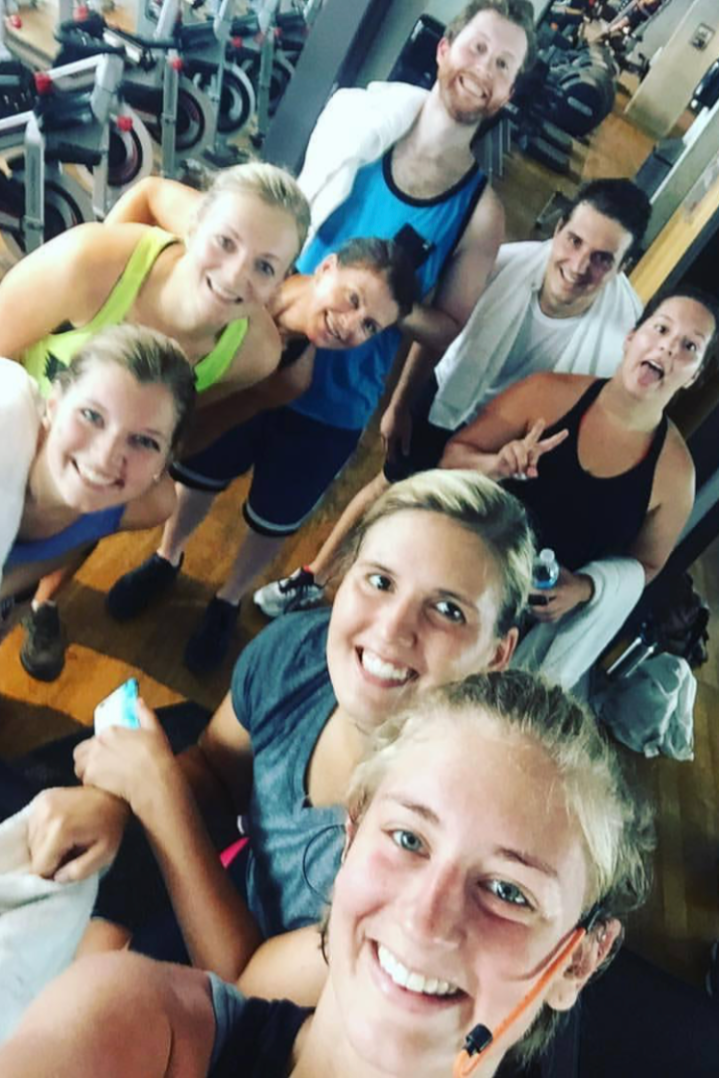
Sport and movement have been woven into my life from a young age. I have experienced the effects of exercise as a natural anti-depressant. I taught indoor cycling for 5 years in Toronto, and have been committed to my yoga practice since adolescence. Through my commitment to my own mental health through movement, I came to understand the body as something deeply intertwined with emotions, mental health, and relationships.
This practice of relating to my own body has influenced the way I listen. I notice the physical body through attunement to breath, posture, tension, timing, and the space between people. This has helped me to develop my embodied, somatic relationship therapy and somatic couples therapy practice.
I don’t separate who I am from the work I do. I hold myself to the same process I invite my clients into — one that values awareness, accountability, and the willingness to stay present with what’s real.
It is a true honour to work with you.
Professional Experiences in Sexual Health, Couple and Family, Community Mental Health
Where it all began…
My path into psychotherapy began through sexual health, where I first became interested in mental health through the context of intimacy, connection, and relationships.
Child & Youth work
I later began working in mental health through the field of child and youth work, including several years in hospital settings where I was exposed to the psychiatric side of mental health care.
Grad training
My graduate training was rooted in couple and family therapy, with direct client work taking place through the on-site Couple and Family Therapy Centre at the University of Guelph. I was drawn to this program through a belief that this work is learned through doing, and the extensive direct client contact (500 hours) provided a strong foundation for becoming a therapist.
During this time I also pursued research in the area of sexuality. This work exposed me to the diversity of human intimacy and expanded my understanding of identity, relationships, and sexual expression. It also broadened my appreciation for the trauma, shame, silence, or misunderstandings that can interfere with people’s relationships to their bodies, sexuality, and each other. This experience pushed me to seek and develop a trauma-informed therapy practice.
Community work
For nearly a decade, I have worked in community mental health across Toronto, supporting youth and families navigating complex relational and mental health issues. Much of this work takes place directly in the community rather inside a traditional therapy office. Sessions often involved working with clients in their homes, walking, spending time in nature, and supporting connection to their family and broader community.
Many of the youth and families I work with are navigating multiple systemic barriers, language barriers, marginalization, trauma, racism, and experiences of oppression. This work fundamentally changed the way I understand mental health and relationships, shaping me into a “systemic thinker”. I began to see how deeply people develop in the conditions around them, and how impossible it is to separate individuals from the relational, social, cultural, and environmental context we live within. During this time I have been intensively trained in Attachment-Based Family Therapy, while also being exposed to a wide range of therapeutic approaches, relational dynamics, and real-world complexity that continues to support the way I practice today.
Private Practice
Since 2019, I have also worked with couples and individuals in private practice, integrating relational, trauma-informed, and experiential approaches depending on the needs of the people I’m working with. My clinical approach has been deeply informed by the work of Janina Fisher and contemporary understandings of trauma, attachment, embodiment, and nervous system regulation.
Training & Modalities
-
ABFT intensive training with Suzanne Levy at Central Toronto Youth Services 2018
ABFT ongoing consultation with Suzanne Levy at Central Toronto Youth Services 2018-2023
Attachment-Based Family Therapy is an empirically supported family therapy model designed to treat adolescent depression. When parent-child attachment is repaired, the youth’s overall mental health improves because close relationships are the foundational support for well-being and vitality.
Training in this model provided an in-depth understanding of how relational repair occurs, and is a model of repair that can be applied across various relationships.
-
Frank Anderson Internal Family Systems & Trauma 2019
Toni Herbine Blank’s Intimacy from the Inside Out for couples 2022
“Parts work” has become a staple of my practice in supporting clients to accept and embrace their multi-dimensionality.
-
“A picture is worth a thousand words.” I have studied inneractive parts cards and use these as a visual tool to support quicker access to what is happening for clients. I find this to expedite the process of understanding what people are really hoping for in the process of working with me, and also supports to build the therapeutic relationship.
-
EMDR training with the Niagara Stress and Trauma Clinic 2019
EMDR is an evidence-based therapy that supports trauma recovery. It is very different from traditional talk therapy and is considered a body-based treatment. The model uses bilateral stimulation (back-and-forth across the left and right sides of the body), such as eye movement, tapping, or audio while recalling the traumatic memory that is causing symptoms. The idea is that the bilateral stimulation supports left and right hemispheric integration of the traumatic memory, which removes the traumatizing aspect of the memory and heals the brain.
-
Guelph Intensive Sex Therapy Training 2016
Sensate Focus Training 2019
Continuing education at the following sexuality conferences:
Guelph Sexuality Conference 2014, 2015, 2016
New View Campaign — Challenging the Medicalization of Sex 2016
American Association of Marriage and Family Therapy 2017
American Association of Sexuality Educators, Counselors, and Therapists 2016, 2018
Society for Scientific Study of Sexuality 2017, 2018
-
I have studied Janina’s work since 2020. I find her workbook for therapists a useful tool for simplifying complex nervous system and mental health concepts.
-
Breath Retraining & Buteyko with Jennifer Snowdon 2025
Breath acts as a direct connection between the conscious mind and the autonomic nervous system. As in, if we can change our breath, it is direct access to changing the survival patterns that are wreaking havoc on our mental health and relationships. How we are breathing can help us see into how we are thinking, feeling, sleeping, dreaming, eating, and relating. That said, breath is not the “low-hanging fruit” of strategies. Despite it being a seemingly straightforward thing, it is requires deep excavation to change it.
“Do you have sleep-disordered breathing? Or breath-disordered sleeping?” -Jennifer Snowdon
Sleep has been something I have struggled with for a long time. Sleep apnea runs in my family, and palate development is something that we are just on the precipice of understanding more about as a societal issue. Learning that Buteyko breathing is a natural approach to sleep apnea, I took the Breath Retraining Program with Jennifer Snowdon. I learned proper breathing techniques, buteyko training, tongue exercises, and explored my emotional relationship to breath. Combined with my lifelong yoga practice I have learned how use conscious breath to support my overall health and vitality, and I offer that training to my clients.
-
Clinical Supervision Level 1: Foundational Knowledge
Dr. Jeff Chang and the Psychologists’ Association of AlbertaI completed a supervision training with Dr. Jeff Chang, which helped me to explore my philosophy of supervision. I have been actively engaged in peer consultation and informal supervision support during my years in youth agency work.
-
Centering Black Youth Wellbeing with YouthRex at Central Toronto Youth Services 2022
Deconstructing resilience and re-constructing resistance with Dr. Roberta Timothy at Central Toronto Youth Services 2021
Anti-Asian Racism training with the Learning Network at Central Toronto Youth Services 2020
Canadian Indigenous training with the Learning Network at Central Toronto Youth Services 2020
Equity Training with Kike Ojo-Thompson at Central Toronto Youth Services 2019
Anti-Black Racism training at Central Toronto Youth Services 2018
During my employment at Central Toronto Youth Services, the organization provided a ton of education for staff to develop an anti-racist, anti-oppressive practice.
During this time I learned the connection between the system we live in that privileges few and oppresses many, often along the lines of race and identity, to the mental health struggles people are facing. Oftentimes people are carrying around the unwarranted burden of the way the system undermined them, and I see my role as supporting clients to tease apart the shame and pain they are holding in association with their “self” and re-assigning this to the system.
Having attuned awareness to this connection has supported me to gently name to clients when I think they may be holding something that is not really theirs to hold. The beauty of this process has been that when clients are freed up from shame, blame, and pain, they are empowered to take responsibility for themselves. Without perfection, this experience has helped me to maintain a practice that holds a non-pathologizing stance to support people of all ethnicities, genders, sexual orientations, relationship types, ages, and abilities.
The other side of this work is recognizing that humanity cannot be neatly categorized into boxes, and it is of utmost importance to me that I see each client I work with as a whole human, rather than being reduced to their identity categories.
-
CTYS Narrative Strengths-Based Training 2019
Narrative therapy externship at Skylark Youth & Families 2017
Narrative therapy practicum at University of Guelph 2016
Narrative therapy is a model of therapy that was born out of a political shift in power in relation to this work. Narrative rebalances the power between client and therapist, and sees the therapist as a curious interviewer, with the client being the true expert on their own lives. Instead of pathologizing mental illness, this model separates problems from people. Narrative is juxtaposed to some of the earlier psychoanalysis models that relied on a hierarchy of power and diagnosis to treat “mental illness.”
-
Solution-focused Therapy training with Youthlinx at Central Toronto Youth Services 2022
Brief Solutions Model with George Hull at Central Toronto Youth Services 2021
Solution-focused therapy practicum at University of Guelph 2016
Solution-focused isn’t what it sounds like. It’s not necessarily a quick fix. The model focuses on “exceptions” to the problem, and helps us figure out why it’s working, when it’s working, and how to do more of that. It’s a hope-inspiring model that supports positive thinking that is based in reason. I use many of the tools from this model in my practice.
-
DBT training at Central Toronto Youth Services 2019
DBT training at Halton Healthcare Services 2014
DBT is one of the most researched models of therapy and was developed for the treatment of borderline personality disorder. It works with the dialectic “acceptance” versus “change” and helps clients to hold two opposing forces at once. Such as, “this is intolerable, but I am here right now.”
-
Distress Centre Training 2013
Using CBT with Suicidal Youth at Halton Healthcare Services 2014
Cognitive Behavioural Therapy is a well researched model of therapy, and is most often used in medical contexts. It is great for teens and those just beginning to scratch the surface of cycles. For those who understand their patterns deeply, this model is limited.
-
Dialogic practicum at University of Guelph 2016
Dialogic as a model of therapy reminds me of Martin Buber’s I-Thou versus I-It relationships. This model is deeply philosophical and focuses on the “dialogue” as the medium of change for the client. The therapist must relate to the client as a subject, not an object to be fixed. This is another model of therapy that is juxtaposed to some of the earlier psychoanalysis models that relied on a hierarchy of power, more of an “I-It” relationship, and diagnosis to treat “mental illness.”